SUN GLOBAL
Factory direct peptide supply
Copper Peptide
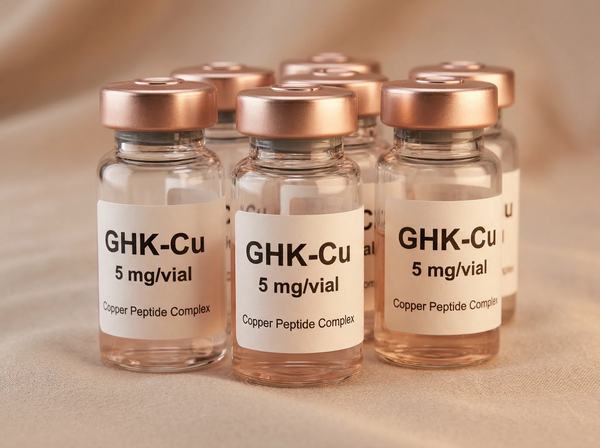
GHK-Cu (Glycyl-L-Histidyl-L-Lysine Copper) is a naturally occurring copper complex that has demonstrated remarkable skin-support and tissue-remodeling research properties. It stimulates collagen synthesis, promotes angiogenesis, and has antioxidant effects. Widely used in medical aesthetics research for its ability to support skin-related biomarker and tissue-repair research.
For faster quotation, include purity, quantity, packaging request and target market.
GHK-Cu (Glycyl-L-Histidyl-L-Lysine Copper) is a naturally occurring copper complex that has demonstrated remarkable skin-support and tissue-remodeling research properties. It stimulates collagen synthesis, promotes angiogenesis, and has antioxidant effects. Widely used in medical aesthetics research for its ability to support skin-related biomarker and tissue-repair research.
Gly-His-Lys · Cu²⁺
Gly-His-Lys · Cu²⁺
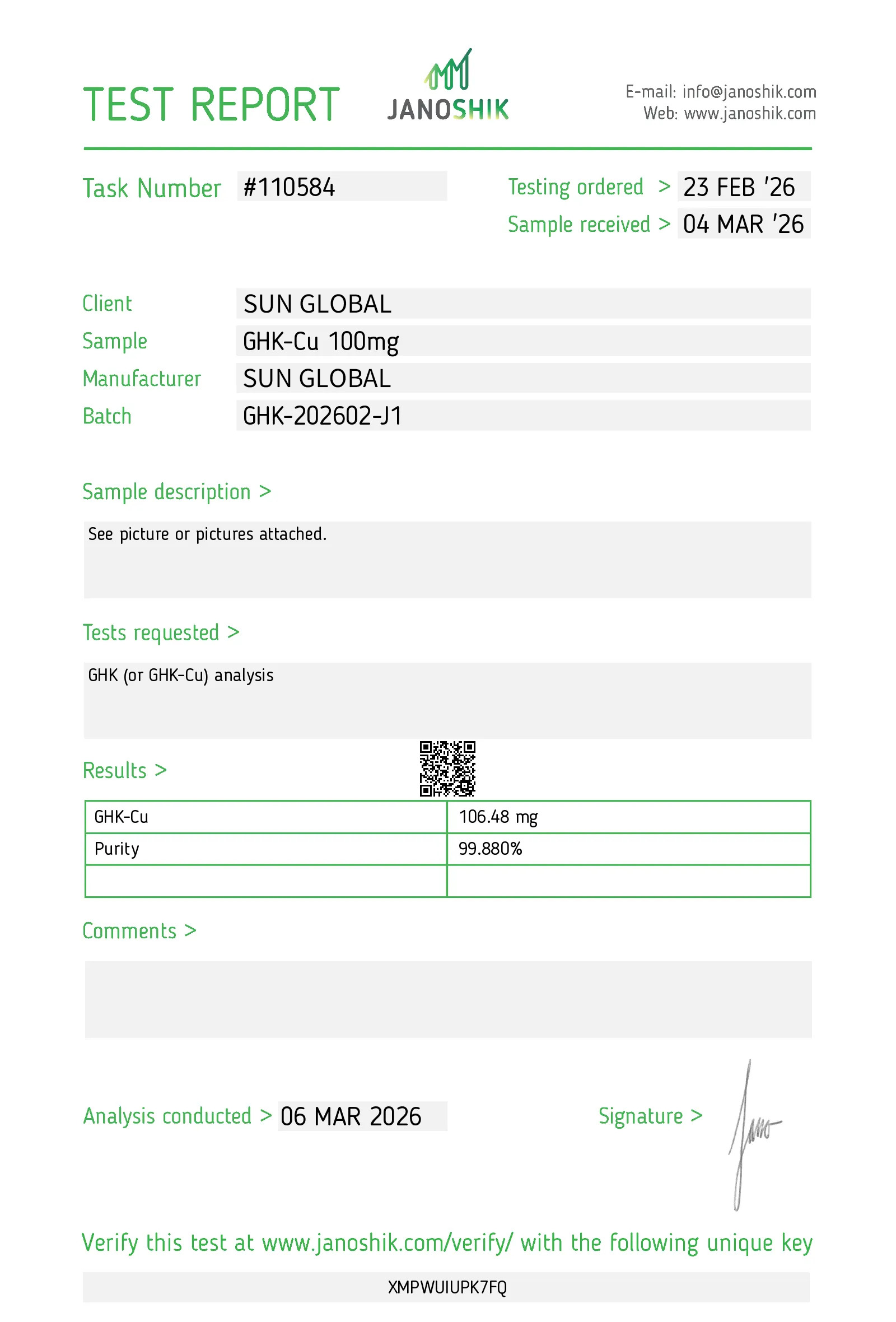
Batch-specific testing results
Factory supply workflow
Send the product name, selected strength, quantity, purity requirement, packaging style and destination market. The sales team can confirm stock, MOQ, batch COA, HPLC/MS files, lead time and private label options.
Product name, mg/vial, vial count and target quantity.
Batch COA, HPLC, MS, appearance and storage conditions.
Factory price, MOQ, label, box and custom brand support.
Fast preparation with export support and shipment updates.
Peer-reviewed scientific literature on GHK-Cu from PubMed, NEJM, The Lancet, and other authoritative sources.
Pickart L, Vasquez-Soltero JM, Margolina A.
BioMed Research International, 2015: 648108 (2015)
GHK-Cu upregulates over 4,000 genes involved in tissue remodeling, antioxidant defense, and anti-inflammatory pathways while downregulating genes associated with cancer progression and inflammation, positioning it as a broad-spectrum regenerative agent.
Leyden JJ, Rawlings AV.
Journal of Investigative Dermatology, 119: 1060–1065 (2002)
GHK-Cu treatment significantly increased skin density, thickness, and collagen content while reducing fine lines, wrinkles, and hyperpigmentation compared to placebo, with improvements correlating with increased type I and III collagen synthesis.
Dou C, Li J, Kang F, et al.
Wound Repair and Regeneration, 27: 1–12 (2019)
GHK-Cu significantly accelerated wound closure in diabetic mice by reducing pro-inflammatory cytokines (TNF-α, IL-1β), promoting M2 macrophage polarization, and enhancing VEGF-mediated angiogenesis and collagen remodeling.