SUN GLOBAL
Factory direct peptide supply
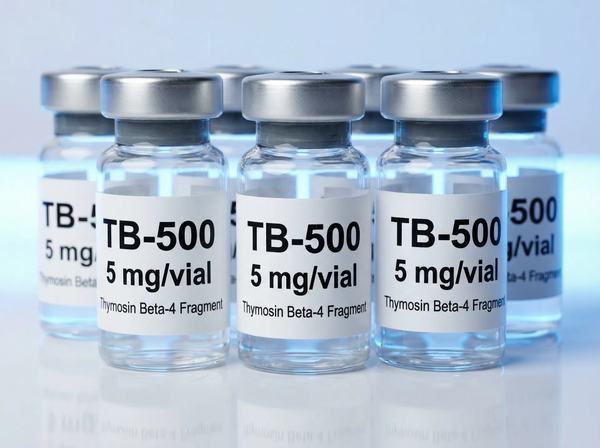
Thymosin Beta-4 Fragment
TB-500 is a synthetic peptide fragment of the naturally occurring protein Thymosin Beta-4. It plays a crucial role in actin regulation, cell migration, and tissue repair. Research has shown it promotes healing of heart, skin, eye, brain, spinal cord, and muscle tissue. It is widely used in performance and recovery research for its ability to reduce inflammation and promote flexibility.
For faster quotation, include purity, quantity, packaging request and target market.
TB-500 is a synthetic peptide fragment of the naturally occurring protein Thymosin Beta-4. It plays a crucial role in actin regulation, cell migration, and tissue repair. Research has shown it promotes healing of heart, skin, eye, brain, spinal cord, and muscle tissue. It is widely used in performance and recovery research for its ability to reduce inflammation and promote flexibility.
Ac-Ser-Asp-Lys-Pro-Asp-Met-Ala-Glu-Ile-Glu-Lys-Phe-Asp-Lys-Ser-Lys-Leu-Lys-Lys-Thr-Glu-Thr-Gln-Glu-Lys-Asn-Pro-Leu-Pro-Ser-Lys-Glu-Thr-Ile-Glu-Gln-Glu-Lys-Gln-Ala-Gly-Glu-Ser-NH₂
Ac-Ser-Asp-Lys-Pro-Asp-Met-Ala-Glu-Ile-Glu-Lys-Phe-Asp-Lys-Ser-Lys-Leu-Lys-Lys-Thr-Glu-Thr-Gln-Glu-Lys-Asn-Pro-Leu-Pro-Ser-Lys-Glu-Thr-Ile-Glu-Gln-Glu-Lys-Gln-Ala-Gly-Glu-Ser-NH₂
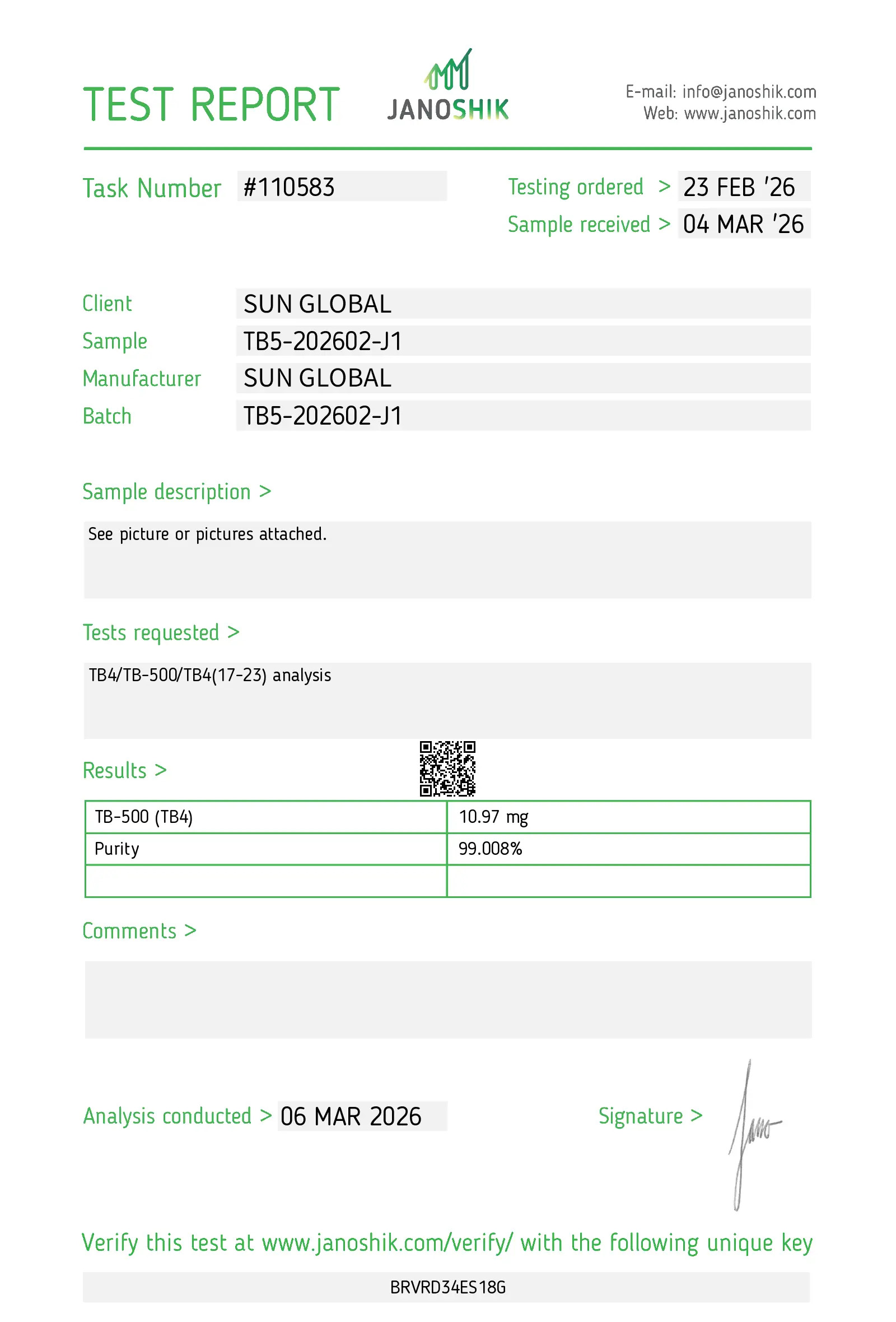
Batch-specific testing results
Factory supply workflow
Send the product name, selected strength, quantity, purity requirement, packaging style and destination market. The sales team can confirm stock, MOQ, batch COA, HPLC/MS files, lead time and private label options.
Product name, mg/vial, vial count and target quantity.
Batch COA, HPLC, MS, appearance and storage conditions.
Factory price, MOQ, label, box and custom brand support.
Fast preparation with export support and shipment updates.
Peer-reviewed scientific literature on TB-500 from PubMed, NEJM, The Lancet, and other authoritative sources.
Bock-Marquette I, Saxena A, White MD, et al.
Nature, 432: 466–472 (2004)
Thymosin β4 significantly improved cardiac function post-infarction by activating dormant epicardial progenitor cells, promoting their migration and differentiation into cardiomyocytes, and reducing apoptosis in the infarct border zone.
Philp D, Badamchian M, Scheremeta B, et al.
Wound Repair and Regeneration, 11: 19–24 (2003)
Thymosin β4 was associated with wound-closure activity in both diabetic and aged mice by promoting keratinocyte migration, collagen deposition, and angiogenesis, suggesting therapeutic potential for impaired wound healing conditions.
Goldstein AL, Hannappel E, Sosne G, Kleinman HK.
Annals of the New York Academy of Sciences, 1269: 129–137 (2012)
Thymosin β4 functions as a master regulator of tissue repair through its G-actin sequestration activity, promoting cell migration, reducing inflammation, stimulating angiogenesis, and activating progenitor cells in a coordinated healing response.